

As a leading supplier of Plate Flat Welding Flanges, I'm often asked about the welding process for these essential components. In this blog, I'll delve into the details of the welding process for Plate Flat Welding Flanges, providing you with a comprehensive understanding of how these flanges are joined to pipes or other equipment.
Understanding Plate Flat Welding Flanges
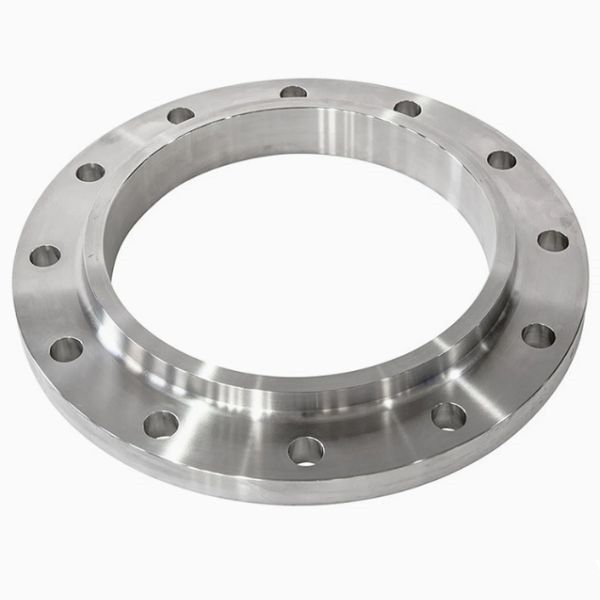
Before we dive into the welding process, let's first understand what Plate Flat Welding Flanges are. These flanges are flat, circular discs with holes drilled around the perimeter for bolts. They are designed to be welded directly to the end of a pipe or other equipment, providing a secure and leak-proof connection. Plate Flat Welding Flanges are commonly used in a variety of industries, including oil and gas, chemical processing, and power generation.
Preparing for Welding
The first step in the welding process is to prepare the flange and the pipe or equipment for welding. This involves cleaning the surfaces to be welded to remove any dirt, grease, or other contaminants. The surfaces should be free of rust, scale, and other debris to ensure a strong and durable weld.

Next, the flange and the pipe or equipment should be aligned properly to ensure that the weld joint is straight and uniform. This can be done using a variety of tools, such as clamps, alignment jigs, and welding fixtures. The alignment should be checked carefully to ensure that the flange is centered on the pipe or equipment and that the bolt holes are properly aligned.

Once the surfaces are clean and the flange and the pipe or equipment are aligned, the next step is to select the appropriate welding process and filler material. The welding process and filler material will depend on a variety of factors, such as the type of flange and pipe or equipment, the thickness of the materials, and the application.
Welding Processes
There are several welding processes that can be used to weld Plate Flat Welding Flanges, including:
- Shielded Metal Arc Welding (SMAW): Also known as stick welding, SMAW is a popular welding process for Plate Flat Welding Flanges. This process uses a consumable electrode that is coated with a flux to protect the weld from oxidation and other contaminants. SMAW is a versatile welding process that can be used in a variety of positions and applications.
- Gas Metal Arc Welding (GMAW): Also known as MIG welding, GMAW is a semi-automatic welding process that uses a wire electrode and a shielding gas to protect the weld from oxidation and other contaminants. GMAW is a fast and efficient welding process that is commonly used in high-volume production applications.
- Gas Tungsten Arc Welding (GTAW): Also known as TIG welding, GTAW is a manual welding process that uses a non-consumable tungsten electrode and a shielding gas to protect the weld from oxidation and other contaminants. GTAW is a precise and high-quality welding process that is commonly used in applications where a high degree of control and quality is required.
Filler Materials
The filler material used in the welding process will depend on the type of flange and pipe or equipment, the thickness of the materials, and the application. Some common filler materials used for Plate Flat Welding Flanges include:
- Carbon Steel: Carbon steel is a popular filler material for Plate Flat Welding Flanges because it is strong, durable, and relatively inexpensive. Carbon steel filler materials are available in a variety of grades and sizes to suit different applications.
- Stainless Steel: Stainless steel is a corrosion-resistant filler material that is commonly used in applications where the flange and pipe or equipment will be exposed to harsh environments. Stainless steel filler materials are available in a variety of grades and sizes to suit different applications.
- Alloy Steel: Alloy steel is a high-strength filler material that is commonly used in applications where the flange and pipe or equipment will be subjected to high stresses and loads. Alloy steel filler materials are available in a variety of grades and sizes to suit different applications.
Welding Procedure
Once the welding process and filler material have been selected, the next step is to follow a proper welding procedure to ensure a strong and durable weld. The welding procedure should include the following steps:
- Preheat the Materials: Depending on the type of flange and pipe or equipment, the materials may need to be preheated before welding to reduce the risk of cracking and other defects. The preheat temperature will depend on a variety of factors, such as the type of material, the thickness of the materials, and the welding process.
- Set the Welding Parameters: The welding parameters, such as the welding current, voltage, and travel speed, should be set according to the welding procedure and the type of filler material being used. The welding parameters will affect the quality and strength of the weld, so it is important to set them correctly.
- Weld the Flange to the Pipe or Equipment: The flange should be welded to the pipe or equipment using the selected welding process and filler material. The weld should be made in a series of passes, with each pass overlapping the previous pass to ensure a strong and continuous weld.
- Inspect the Weld: After the welding is complete, the weld should be inspected to ensure that it meets the required quality standards. The inspection may include visual inspection, non-destructive testing, and destructive testing.
- Post-Weld Heat Treatment: Depending on the type of flange and pipe or equipment, the materials may need to be post-weld heat treated to relieve stress and improve the mechanical properties of the weld. The post-weld heat treatment temperature and time will depend on a variety of factors, such as the type of material, the thickness of the materials, and the welding process.
Quality Control
Quality control is an important part of the welding process for Plate Flat Welding Flanges. To ensure the quality of the welds, it is important to follow a proper quality control program that includes the following steps:
- Inspection of the Flange and Pipe or Equipment: Before welding, the flange and pipe or equipment should be inspected to ensure that they meet the required specifications and standards. The inspection may include visual inspection, dimensional inspection, and material testing.
- Inspection of the Welding Process: During the welding process, the welding parameters and procedures should be monitored to ensure that they are being followed correctly. The inspection may include visual inspection, non-destructive testing, and destructive testing.
- Inspection of the Weld: After the welding is complete, the weld should be inspected to ensure that it meets the required quality standards. The inspection may include visual inspection, non-destructive testing, and destructive testing.
- Documentation of the Welding Process: The welding process should be documented to ensure that it can be traced and verified. The documentation may include welding procedures, welding records, inspection reports, and test results.
Conclusion
In conclusion, the welding process for Plate Flat Welding Flanges is a critical step in the manufacturing and installation of these essential components. By following a proper welding procedure and quality control program, you can ensure that the welds are strong, durable, and leak-proof. As a supplier of Plate Flat Welding Flanges, we are committed to providing our customers with high-quality products and services. If you have any questions or need more information about our products or services, please don't hesitate to contact us. We look forward to working with you.
Additional Products
In addition to Plate Flat Welding Flanges, we also offer a wide range of other flanges, including Duplex Steel Flange, GOST18120 Stainless Steel Flange, and 904L Stainless Steel Flange. These flanges are made from high-quality materials and are designed to meet the needs of a variety of industries.
Contact Us
If you're interested in learning more about our Plate Flat Welding Flanges or any of our other products, please contact us to discuss your requirements. Our team of experts is here to assist you with your procurement needs and can provide you with detailed information about our products and services. We look forward to the opportunity to work with you and help you find the perfect solutions for your projects.
References
- AWS D1.1/D1.1M:2020, Structural Welding Code - Steel
- ASME B16.5:2017, Pipe Flanges and Flanged Fittings
- API 6A:2022, Specification for Wellhead and Christmas Tree Equipment