

Forging
Stainless steel flanges can be processed through forging and casting, but forged flanges have higher quality and strength. Forging processing includes hand hammer forging, air hammer forging, mechanical hammer forging, and pressure forging. By processing and compressing steel at high temperatures, higher material strength and uniform microstructure can be obtained, making it suitable for high-pressure, high-temperature, and strongly corrosive environments. Casting processing includes processes such as mold manufacturing, melting liquid metal, pouring, cooling, and mold removal. Although the production efficiency is high, there are casting defects such as pores, cracks, and inclusions that may occur under high pressure, high temperature, and strong corrosion conditions.
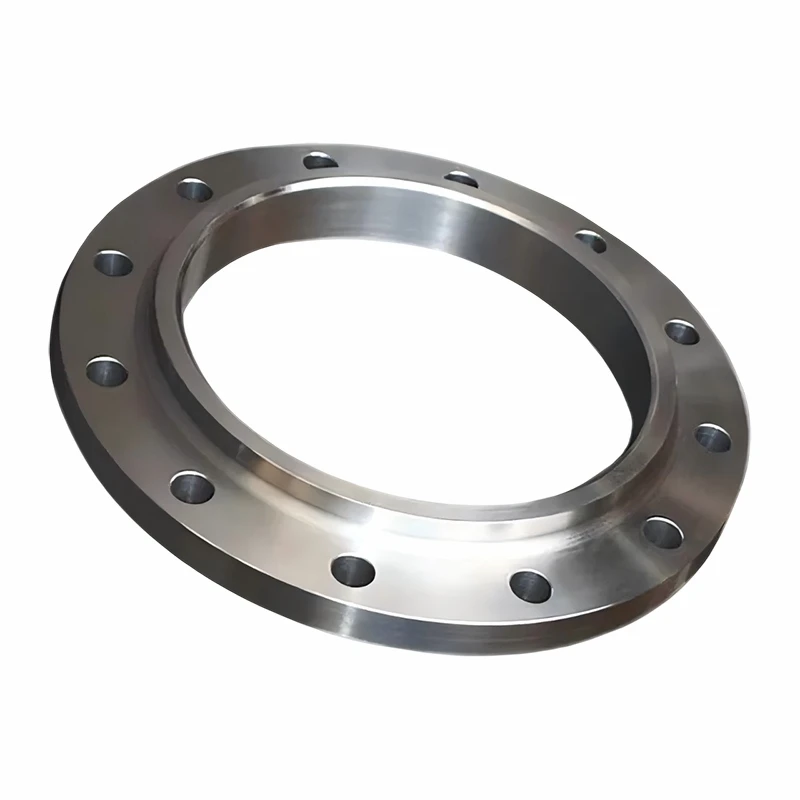
Processing method of stainless steel flange
Forging processing: By compressing steel at high temperatures, a more uniform microstructure and higher material strength are obtained, suitable for high-pressure, high-temperature, and strongly corrosive environments.
Casting processing: With high production efficiency, it can produce various complex shaped flanges, but there are casting defects that may cause problems under high pressure, high temperature, and strong corrosion conditions.
Application scenarios of stainless steel flanges
Forged flanges: Due to their reliable quality, high strength, and strong durability, they are widely used in the manufacturing of high-end machines and equipment, especially in high-pressure, high-temperature, and highly corrosive environments.
Casting flanges: Although they have high production efficiency and low cost, there may be random errors in strength and quality, making them suitable for general industrial pipeline systems.
Through the above comparison, users can choose different processing methods according to specific usage scenarios and requirements to ensure the safe operation of pipeline systems.