

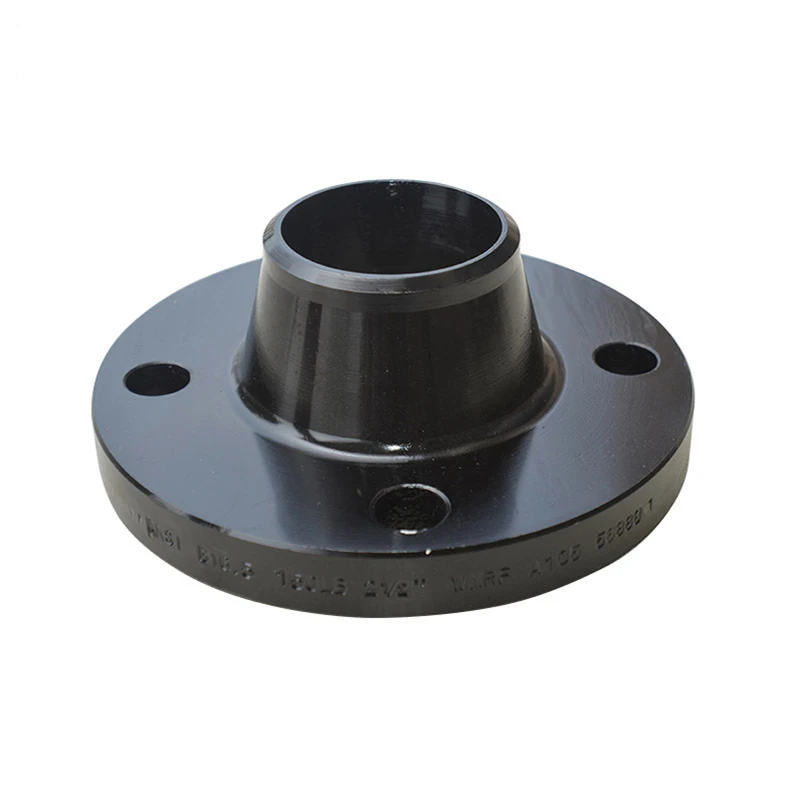
Material and Type
● Material: the main material of stainless steel flanges is stainless steel, which is a steel with stainlessness and corrosion resistance as its main characteristics, and with a chromium content of at least 10.5% and a maximum carbon content of no more than 1.2%. Stainless steel flanges have excellent corrosion resistance and mechanical properties and are widely used in various industrial fields. Specific types of stainless steel may include 304, 316, 321, etc. These types of stainless steel have different corrosion resistance and mechanical properties, and can be selected according to specific application scenarios.
● Types: There are various types of stainless steel flanges, including but not limited to welded flanges (such as weld neck flanges, slip-on flanges), blind flanges and so on. Among them, weld neck flanges have a neck extension and a weld bevel for large, high-pressure applications, while slip-on flanges are designed to accept the pipe into the center/hole, allowing welding around the pipe's outside diameter.
Size and Pressure Rating
● Size: ANSI B16.5 stainless steel flanges are available in a wide range of sizes from 1/2 inch (or 15NB) to 48 inches (or 1200NB), DN10 to DN5000 to meet the needs of different piping systems.
● Pressure ratings: The standard specifies several pressure ratings, such as 150LBS, 300LBS, 600LBS, 900LBS, 1500LBS, 2500LBS, etc., to ensure the safety and reliability of the flanges under different pressure conditions.
Applications and Features
● Applications: ANSI B16.5 Stainless Steel Flange is widely applied in the fields of oil, chemical, natural gas, water treatment, food processing and so on.
● Characteristics: Stainless steel flange has good anti-corrosion and mechanical performance. It is able to resist high temperature, high pressure and bad environment. Furthermore, its standardized design and manufacture guarantees the interchangeability of the flanges manufactured by different manufacturers, which makes them easy to install and maintain.


