

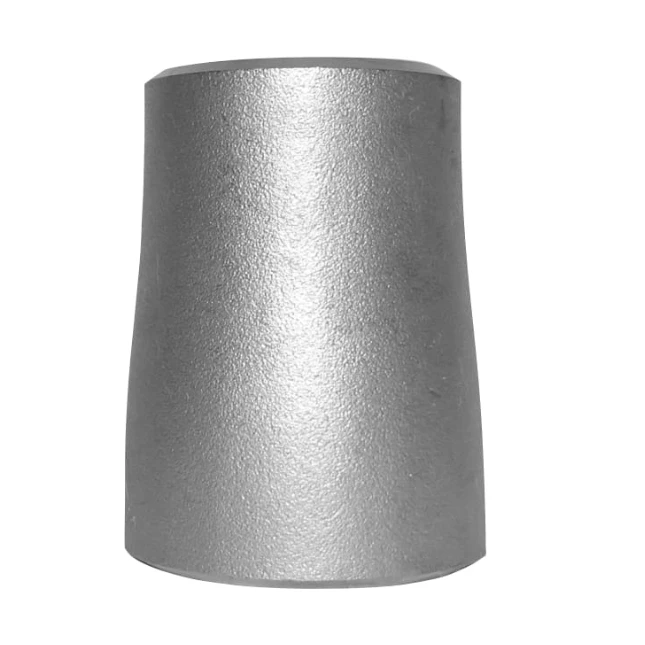
Types and Structures
1. Type:
According to different connecting methods, the reductor flanges can be classified as welded, threaded and socket welded.It can be classified into metallic materials (for example, carbon steel, stainless steel, alloy steel) and nonmetallic materials (for example, plastic, rubber, etc.).
2. Structure:
Generally, the ItReducing flange consists of flange body, pad groove and bolt hole.
The inner diameter of the flange is designed according to the requirements of the connection. It can be a variable cone or a variant step structure.
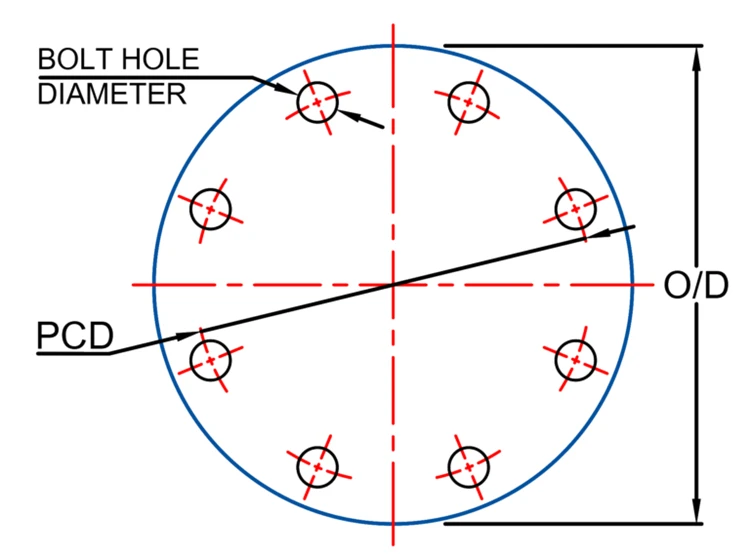
ASME 150, DIN PN10/16 and Table D/E Flange dimensions| CRP US
|
Size |
Standard |
Class |
Outside ø |
Pitch Circle ø |
Bolt Hole ø |
No. of Bolt Holes |
|
1/2″ (DN15) |
ASME B16.5 |
150 |
90 |
60.3 |
15.9 |
4 |
|
300 |
95 |
66.7 |
15.9 |
4 |
||
|
3/4″ (DN20) |
ASME B16.5 |
150 |
100 |
69.9 |
15.9 |
4 |
|
300 |
115 |
82.6 |
19.1 |
4 |
||
|
1″ (DN25) |
ASME B16.5 |
150 |
110 |
79.4 |
15.9 |
4 |
|
300 |
125 |
88.9 |
19.1 |
4 |
||
|
1 1/2″ (DN40) |
ASME B16.5 |
150 |
125 |
98.4 |
15.9 |
4 |
|
300 |
155 |
114.3 |
22.2 |
4 |
||
|
2″ (DN50) |
ASME B16.5 |
150 |
150 |
120.7 |
19.1 |
4 |
|
300 |
165 |
127 |
19.1 |
8 |
||
|
3″ (DN80) |
ASME B16.5 |
150 |
190 |
152.4 |
19.1 |
4 |
|
300 |
210 |
168.3 |
22.2 |
8 |
||
|
4″ (DN100) |
ASME B16.5 |
150 |
230 |
190.5 |
19.1 |
8 |
|
300 |
255 |
200 |
22.2 |
8 |
||
|
6″ (DN150) |
ASME B16.5 |
150 |
280 |
241.3 |
22.2 |
8 |
|
300 |
320 |
269.9 |
22.2 |
12 |
||
|
8″ (DN200) |
ASME B16.5 |
150 |
345 |
298.5 |
22.2 |
8 |
|
300 |
380 |
330.2 |
25.4 |
12 |
||
|
10″ (DN250) |
ASME B16.5 |
150 |
405 |
362 |
25.4 |
12 |
|
300 |
445 |
87.4 |
28.6 |
16 |
||
|
12″ (DN300) |
ASME B16.5 |
150 |
485 |
431.8 |
25.4 |
12 |
|
300 |
520 |
450.8 |
31.8 |
16 |
||
|
14″ (DN350) |
ASME B16.5 |
150 |
535 |
476.3 |
28 |
12 |
|
300 |
585 |
514.4 |
32 |
20 |
Reducing Flange Industries and Applications
Reducing flanges are used in various industries and applications, including:
● Pumps, Valves, and Vessels: In manufacturing and food processing.
● Pipe Connections: For industrial water systems.
● Heat Exchangers and Heating Systems: In all sizes.
● Mining Support: For mining operations.
● Nuclear Power Systems: In nuclear energy facilities.
● Plumbing and Mechanical Systems: For general plumbing and mechanical uses.
● Oil, Gas, and Petrochemical Industries: In various assemblies within these sectors.
● Fire Protection Systems: For fire safety applications.


